

Most people notice a car park when something goes wrong: slippery oil, overflowing litter, or stains that make a site feel neglected. That is why car park cleaning is not a “quick sweep” job. In Australia, it is a layered maintenance task that affects safety, compliance, brand perception, and even how long surfaces and drainage assets last.
What does car park cleaning actually include?
It includes far more than litter pickup and basic sweeping. Car park cleaning typically covers surface debris removal, stain treatment, gum removal, line and bay edge detailing, drain and pit management, and targeted pressure washing.
For shopping centres, strata buildings, hospitals, and commercial offices, the scope also includes cleaning around speed humps, wheel stops, bollards, stairwells, lift lobbies, and entry ramps where grime builds fastest.
Why is sweeping alone not enough in Australian car parks?
Sweeping removes loose debris, but it often leaves behind fine dust, oily residues, and embedded grime. In many Australian cities, windblown sand, leaf litter, and construction dust can quickly recoat surfaces after a basic pass.
That leftover film matters because it contributes to slip risk, stains, and poor drainage performance. A well-planned car park cleaning routine includes deeper periodic treatments that restore surface grip and appearance.
How does car park cleaning reduce slips, trips, and falls?
It reduces incidents by removing hazards that are easy to miss during a quick tidy. Car park cleaning targets oil spots, algae in damp corners, leaf sludge near kerbs, and loose gravel that collects at ramp transitions.
They also focus on pedestrian paths, stairs, and lift entries where foot traffic concentrates. When those areas are kept dry, clear, and free of residue, it lowers risk for customers, staff, and residents.
What are the most common car park stains and how are they treated?
Oil, tyre marks, rust bleed, drink spills, and organic staining are the usual culprits. Effective car park cleaning uses the right chemistry and dwell time, then agitation or hot-water pressure washing where suitable.
They should treat stains early because aged oil penetrates porous concrete and asphalt, making it harder to remove. In enclosed basements, low-odour products and controlled rinse management are often required to avoid lingering fumes and runoff issues.
Why do drains, pits, and grates matter so much?
Because blocked drainage turns small mess into a recurring safety and maintenance problem. Car park cleaning should include clearing grates, flushing channels, and removing sediment from pits before it compacts.
In Australian storm seasons, leaf litter can overwhelm drains quickly. If water pools near entries, bays, or pedestrian routes, it increases slip risk and accelerates surface breakdown, especially where vehicles repeatedly track water and grit across the same lanes.
How does car park cleaning help with pests and odours?
It removes the food sources and grime that attract pests and cause smells. A consistent car park cleaning plan addresses bin rooms, waste bays, corners behind stair cores, and loading areas where spills collect.
They also reduce odours by washing down sticky residues and using deodorising agents in problem zones. That is particularly important in basements where air movement is limited and smells can drift into lifts and lobbies.
What role does pressure washing play, and when should it be used?
Pressure washing is a reset tool, not an everyday solution. In car park cleaning, it is used periodically for ramps, turning circles, stained bays, pedestrian routes, and areas near ticket machines or boom gates.
They should choose the right pressure and nozzle to avoid etching concrete or stripping protective coatings. In multi-level and basement sites, they also need water recovery or careful rinse control so water does not flood pits or migrate into tenancies.
How do they manage dust in basement and multi-storey car parks?
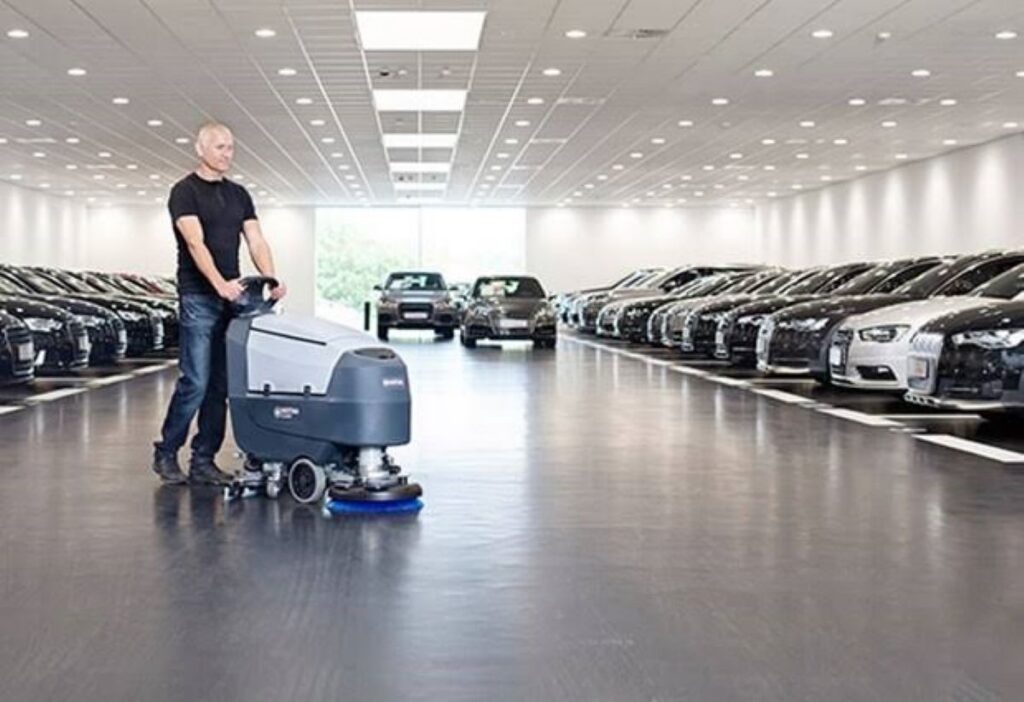
They manage it with commercial-grade sweepers, detail vacuuming, and scheduled deep cleans. Car park cleaning in enclosed areas often needs finer dust control because vehicle movement recirculates particles that settle on walls, pipes, and signage.
They also focus on corners, wall edges, and around columns where sweepers miss. That attention improves air quality, reduces grime on painted surfaces, and helps the space look maintained rather than permanently “grey.”
Why are line markings, signage, and edges part of the cleaning scope?
Because drivers and pedestrians rely on visibility, especially in low light. Car park cleaning keeps bay lines, arrows, accessible parking symbols, and pedestrian crossings clear of dirt film and tyre scuffing.
They also clean signs, mirrors, and bollards so guidance remains obvious. When these elements look sharp, it supports safer traffic flow and reduces complaints about confusing layouts, particularly in busy Australian retail and stadium precincts.
How does car park cleaning protect concrete, coatings, and assets?
It prevents abrasive grit and chemical residues from steadily degrading surfaces. Car park cleaning reduces the sandpaper effect of tracked-in dirt, and it helps protective coatings last longer by removing contaminants that cause peeling or discolouration.
They also protect assets like boom gates, pay stations, and ventilation grilles by keeping surrounding areas free of dust and sticky residues. Over time, that lowers repair frequency and helps planned maintenance stay on budget.
What compliance and documentation do Australian sites often need?
Many sites require proof that cleaning and maintenance are being managed, especially where safety is a key concern. Car park cleaning providers may be asked for SWMS, site-specific risk controls, incident reporting pathways, and after-hours access protocols.
They should also document hazard observations, like oil leaks in a specific bay or damaged drains, so building managers can act. That documentation supports audits and helps show a duty-of-care mindset.
Other Resources : Safe work method statement for high risk construction work
How should car park cleaning be scheduled for minimal disruption?
They schedule around peak traffic and tenant needs, often after hours or early mornings. Car park cleaning can be staged by levels or zones so access remains available, with temporary closures, cones, and clear signage.
They also factor in drying time for pressure washing and spot treatments. In Australian retail centres and office precincts, a predictable schedule reduces complaints because customers and tenants know what to expect.
What should they look for when choosing a car park cleaning provider?
They should look for capability, not just price. A reliable car park cleaning provider can explain their method, equipment, chemical choices, and how they manage runoff, slips, and access control.
They should also ask about insurance, training, and whether the team can handle detail work like gum removal, drain maintenance, and stain treatment. The right provider will also flag issues proactively, rather than cleaning around them and leaving problems to worsen.
What is the simplest way to tell if car park cleaning is being done well?
A well-cleaned car park feels safer, looks brighter, and drains properly after rain. Car park cleaning is working when ramps are not slick, corners are not full of leaf sludge, and bays do not carry old oil halos that never improve.
They should also notice fewer odours near bins and fewer dusty build-ups on edges and walls. If the space consistently looks maintained, it supports confidence in the whole property, not just the car park.
More to Read : What’s the Right Polishing Frequency for Car Showroom Cleaners?